Millions, billions or trillions of variations. But somewhere it will stop.
Your imagination is limited because we live in a limited world, a limited universe.
Our limits are based on the finite objects around us.
Objects that can be designed or shaped in only a finite number of ways.
There may be thousands or millions of variations, as many as allow the object to exist in reality.
By existing in present reality, I mean that the object’s design is subject to the laws of physics and nature and must fit the exact environment in which it is placed.
An environment can differ in only a finite number of ways. Objects within it must respond to and obey its physical and visual laws, in how they are designed from a finite number of possible forms.
Objects must develop to fit each environment within finite standards.
The environment therefore determines the finite number of forms objects can take.
Our imagination is powerful. But take the imagination of all humanity during one hour in the past and put all the different imaginings in a single database. In theory, you could store every person’s imagination in a machine. Imagine storing all human imagination from year 0 to 2020. Identical imaginings would be separated out and only distinct ones stored. Many people imagine similar things, often with a different twist.
Every human has one important thing in common: the ability to think alike. Take one group of people and exchange it with another, changing their environment.
They would experience similar daily lives and influences and therefore similar or comparable imaginings.
As time passes, imagination will expand alongside objects and nature.
How to determine the limit
A stone can take only so many shapes and sizes, from a small stone to one covering the entire universe.
Limits must be divided into segments:
The natural segment
Human-made manufactured objects
These have limits on size and the number of different designs and forms
Limits based on people
Limits based on nature
Limits are based on what is produced by either nature or humans.
It is important to distinguish between imagination and the limits of reality.
The limits of imagination come in all shapes and sizes.
Divide imagination into the obvious or reasonable, the meaningful and the completely out of this world. Humanity can have the strangest ideas and visions.
Obvious or reasonable imagination is ordinary imagination: something we could probably produce, something suited to its environment and meaningful, something that could be made and placed before us.
The world we live in is shaped by human rules and the human eye. We decide what is normal. From this perspective we can organise the two segments: normal imagination, something capable of existing.
The other is imagination without limits or meaning, an imagining with no place on Earth or in the universe.
There is a third option: a mixture of the two, reality and unreality.
Machine intelligence
Is it possible to build a machine containing everything on Earth — the shapes and sizes within the limits of what is possible for an object? Could you make an algorithm for one object in every possible shape and size, whether normal or any possible form, millions or billions of designs, both reasonable and unreasonable?
Then create an algorithm for every object on Earth, from rocks to computers.
Afterwards, do the same with people and animals.
Start with a city: what objects are there, and how many? Catalogue everything and create algorithms for each object. How large or small can it be? How many designs are possible?
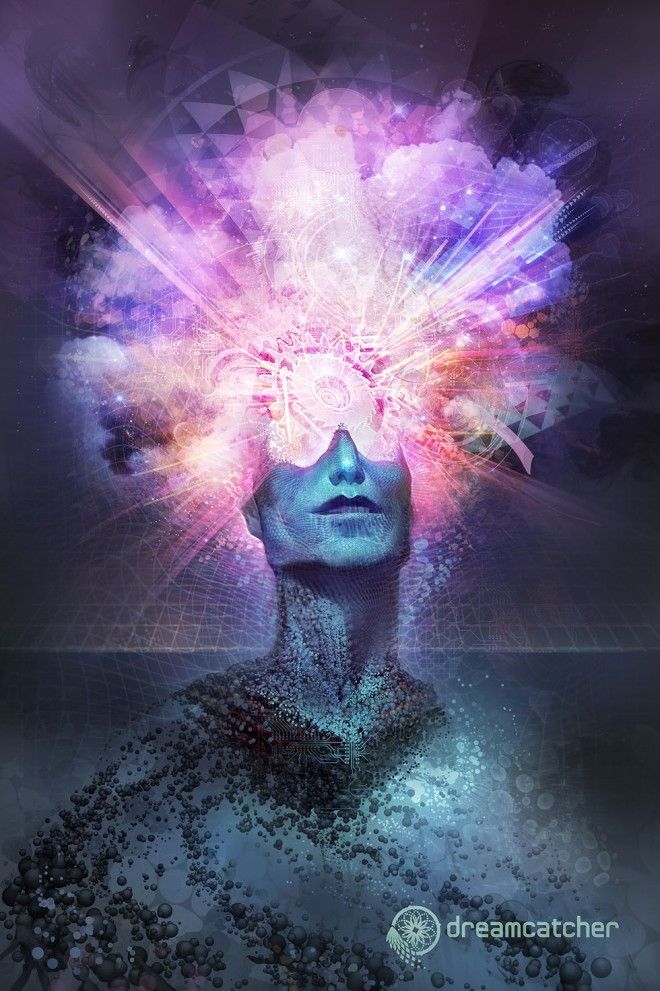
Try to imagine the imaginings of everyone alive today, including those from yesterday and ten years ago. Put all this data into large databases and sort the different imaginings. Then you get a result showing what has been imagined.
To arrive at the almost infinite number that limits the imagination of all people alive today, you have to look around you and out into the universe. Add together all surroundings, environments, people and every possible object that exists today, and stretch as far as possible what can be imagined. In other words, what is it possible for a person to imagine? Then multiply what it is possible to imagine by all living people. What I mean by 'what it is possible to imagine' is that a person's ability to form thoughts is limited by their environment, surroundings, people in their vicinity, or people seen and heard from a distance, and, not least, every possible object between heaven and Earth and in the universe. Together, these make up what a person is capable of thinking or using their imagination for.
Imagination explained in terms of limits could be monitored and measured on a large scale. Future artificial intelligence will explain further.