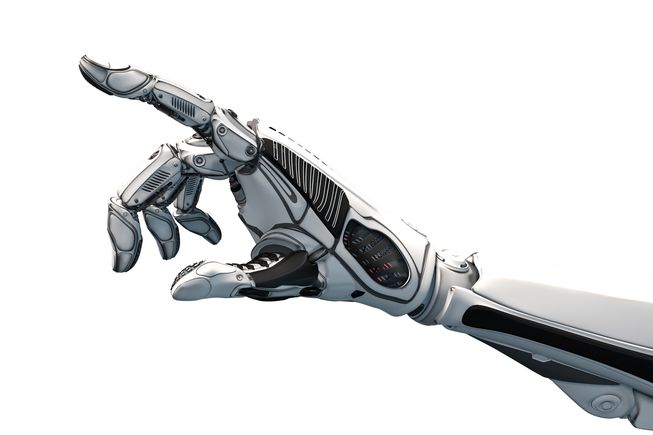
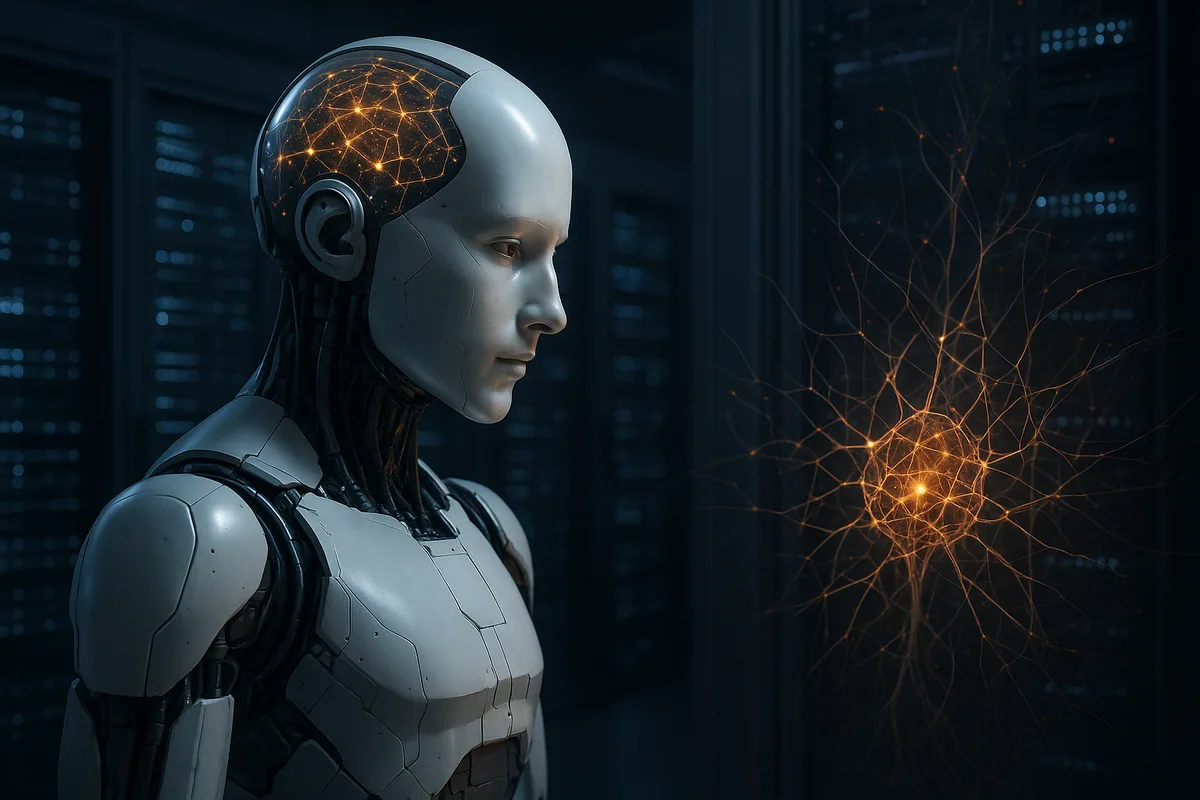
The precise movement involved in a human being's ability to perform a delicate manoeuvre with hands and arms.
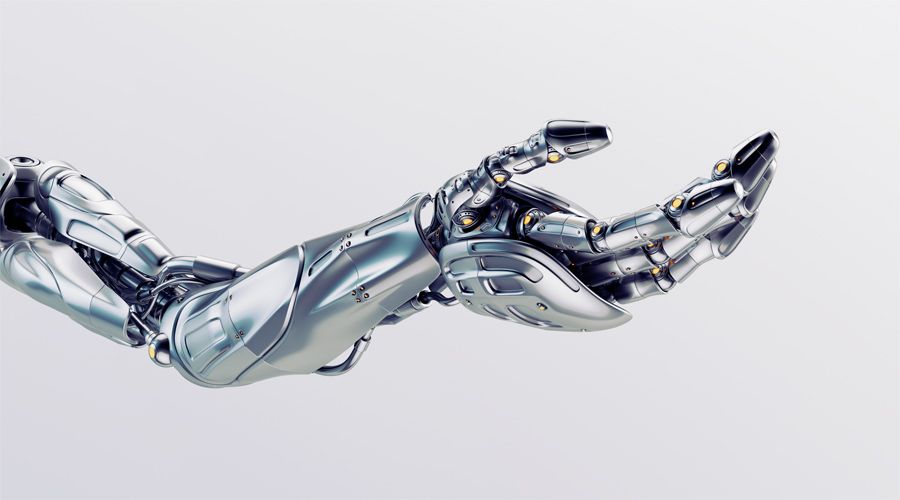
With a touch of machine learning and advances in data processing, use this for learning by doing. Feed in existing data and algorithms and let them reap the results while continuing to feed them data.
Not a hanging, robot-dancing machine like C-3PO, but a careful and precise machine.
A machine-learning device that memorises every movement using what is implemented as previously used learning algorithms and abilities. Learning by doing, collecting data and processing it, with the goal of becoming familiar with every possible environment and every type of task associated with this particular field of industry.
Put it this way: for every industry there is a limited number of tasks to perform. Take the painting industry, for example: there are only so many ways to carry out a painting job or perform maintenance. There is a certain number of buildings that have either been built or are to be built. Put all these equations or goals together — whatever you want to call them — and you can see that the number of objects on which a task can be performed is limited. You can therefore count the existing tasks, methods, buildings and environments, with subcategories within each main factor. With this information collected, processed and implemented in a working device with precise, imitative body movements, you are theoretically able to perform the task using a device equivalent to hundreds of different roles and skills across an entire industry.
Because you know the number in a limited industry, there is a final number — a certain number of variations. It must therefore be limited. You can look ahead and call it unlimited because we cannot predict what the mathematical 'equation' for a limited number of methods and so on in any industry will be.